
Confession: I wanted to be a Manic Pixie Dream Girl
“These are my confessions/Just when I thought I said all I could say/My chick on the side said she got one on the way/These are my confessions” – Usher, ‘Confessions pt. II’
No I don’t have a chick on the side and if I did she wouldn’t have one on the way considering I would be physically incapable of knocking her up (though I’m sure you can find a case of that happening on Yahoo! Answers). ‘Confession’ will be a regular feature where I will confess something about me. So here goes….
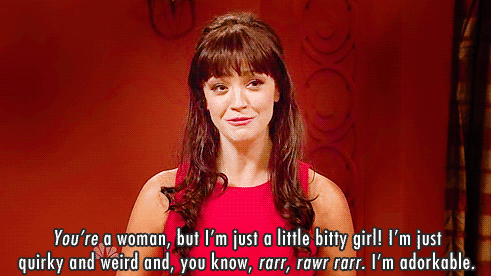
In high school I desperately wanted to be a Manic Pixie Dream Girl. Only I didn’t know it was called that at the time. Nathan Rabin coined the term in his 2007 review of Elizabethtown and by that time I was already finishing up my first semester of college.
But in 2004-2005, my sophomore year of high school, there were signs of my emerging MPDGism. Looks-wise, I was a proto-hipster. I wore little league jerseys with thrift store blazers meant for 6-year- old boys. An ironic love for 80’s/90’s nostalgia, I rocked a Rainbow Brite watch that was bought for $8.00 and paid for all in change. I watched Degrassi (80’s AND Next Gen) and almost bought a pair of granny glasses BEFORE those things were things. Hello, I bragged about knowing about things before they became things! It didn’t stop there.
Within my dollar store Power Rangers bookbag hid my treasured hot pink CD player. In all fairness, I wasn’t trying to be analog–iPods weren’t things yet. Aside from a few emo pop CD leftovers from freshman year, I was stocked with Death Cab, Superchunk, The Shins, The Mosquitoes, The Weakerthans, and pretty much any band with ‘The’ in its name.
While I genuinely adored all of my clothes and music (I wasn’t just indulging to be ‘different’), I felt misunderstood and lonely in all this quirk.
Then a movie flipped my 15-year-old world. It was a lesson in indie, in melancholy, in love. It was funny, bittersweet, tender, aloof, quirky. It was Garden State.
The soundtrack! The quotes! Oh, the quotes. I think I had the following quote as my away message for an entire year: “This is your one opportunity to do something that no one has ever done before and that no one will copy throughout human existence. And if nothing else, you will be remembered as the one guy who ever did this. This one thing.”
My angst and blasé attitude toward life at the time was near-perfectly represented by Andrew (Zach Braff). More importantly, it introduced me to the person I was trying so hard to be, the ultimate MPDG: Sam (Natalie Portman). Finally, a character that spoke to me! We had the same name! Fate!
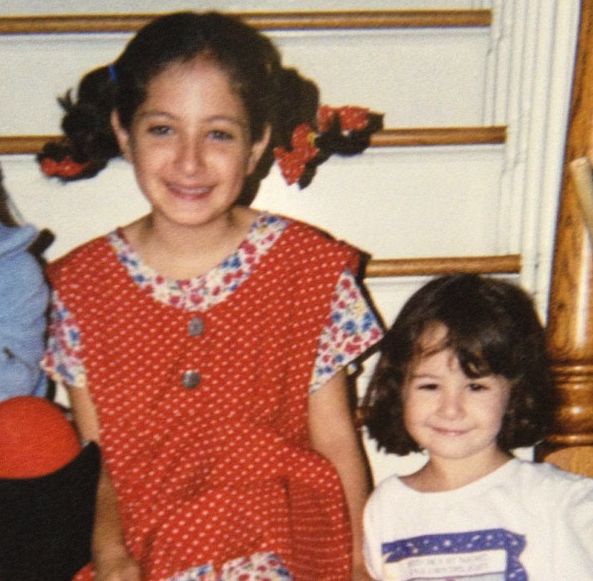
’98 Me as Pippi Longstocking, the OG MPDG
As an adult, it’s strange to read about all the negative aspects of MPDGs. As a teenager I viewed the MPDG as totally empowering. I thought it was cool that Sam wasn’t afraid to be weird and talk freely about her hamsters. Most dream girls in movies were super hotties with no hints of awkwardness. Sam was relatable (granted I was 15, that should say something of the arrested development of the MPDG). The MPDG could be awkward and eccentric and still desirable, likable, even lovable. She was free to be herself (though usually with the caveat that she was dying of a terminal illness), and this in turn inspired me to embrace all my quirks.
‘Free to be you and me’ is all fine and dandy except most of the MPDG analysis is right: MPDGs are stock characters. Characters only there to make the male character more interesting. Her existence seems to hinge solely on the male character’s development rather than the formulation of her own separate identity.
I can see how that affected my view at the time. Instead of celebrating how great it was that I had a passion for old movies and an interest in underground music, I focused on how to harness all that energy into securing a Zach Braff-character to kiss me.
Why? Aside from teenage hormones, the static character of the MPDG relies on the man to notice her interests or the audience would never know she was ‘interesting.’ I felt like I needed a boy to see I was interesting in order to confirm it (a la Garden State). I thought if an Andrew noticed my hobbies, my unique zany approach to life I’d be complete and have someone dedicate their whole AOL profile to ME. I mean, if a 15-year-old girl falls in a Salvation Army and a quirky 17-year-old boy doesn’t rush over and help her up…did she even really fall?
Vulture posted a wonderful defense of Garden State that made me think more about the arrested development of not only the MPDG, but the very men falling for them. Garden State in particular was released during the Bush era in a time of political and socio-economic shifts that affected the 20-30 somethings viewing the film. It’s as though this societal mope-fest was on the same wavelength as my teenage angst. Because, well, it kinda was. Indie culture was escapism (be it the economy or high school) and unfortunately it was up to MPDGs to be the tour guides rather than the active participants.
Now, I’m not anti-Garden State (dude, that soundtrack still holds up!) or even anti-MPDGs, so long as they can operate independent of the male characters (Annie Hall, Harold & Maude). I just wish I could of told myself that at the time. I wish I could tell my 15 -year-old self to keep exploring her interests in music and movies and crafts and all the weird things she was into rather than worrying so SO much about needing a boy to confirm how awesome she already is.
And also I would tell her that she shouldn’t start wearing Abercrombie again like she’ll do toward the end of high school junior year.
 judge city